Giving search engines the right instructions will improve link and ranking signals for your content available through multiple URLs or via syndication, Google says.
Today we’re excited to facilitate the checking part of this routine for you — the Site Audit tool now allows you to check if you’ve implemented canonical tags correctly on your website in a flash.
What Is the Canonical Tag?
If you have similar or the same content available across multiple URLs or even multiple websites, it’s confusing for a search engine to decide which page to show.
This is when you would want to implement the rel=”canonical” element in your webpage markup — it’s basically a tag that will inform search engines which version of a page should be displayed in search results.
Using canonicalization the right way helps you control similar or duplicate content on your website without harming your rankings, so be sure you’ve implemented it correctly.
How to Identify Canonicalization Issues with Site Audit
First, go to one of your projects for which you’ve set up the Site Audit tool. If you don’t have any, head to the Project Dashboard, create a new project and set up the tool.
Next, go to the ‘Issues’ tab and click on ‘Select an Issue’ button to find out if canonicalization checks have been triggered for your website.
Broken Canonical Link
This check is triggered if a rel=”canonical” link specified by you is broken and thus leads to nowhere. It’s important to detect this issue, as a broken link complicates the process of crawling and indexing your content by search engines, which can lead to crawl budget waste.
Click on the check’s name to get a list of your pages that have a broken canonical link.
On the right you’ll find the HTTP status code of the canonical link URL. Learn how to fix this issue in the ‘Why and how to fix it’ section.
Multiple Canonical URLs
This check is triggered if you’ve specified more than one rel=”canonical” link in your page’s markup. Seeing multiple canonical URLs, search engines can’t identify which URL is the actual canonical page, and will likely ignore all the canonical elements or pick the wrong one.
Click on the check’s name to get a list of your pages that have multiple canonical links.
We’ll display the first canonical link URL from your page’s markup in the table. Don’t forget to check out how to fix this issue in the ‘Why and how to fix it’ section.
What do you think about this handy enhancement? Let us know your thoughts by dropping us an e-mail at site-audit-feedback@semrush.com.
About Semrush
Semrush is a leading online visibility management SaaS platform that enables businesses globally to run search engine optimization, pay-per-click, content, social media and competitive research campaigns and get measurable results from online marketing. Semrush offers insights and solutions for companies to build, manage, and measure campaigns across various marketing channels. Semrush, with over 91,000 paying customers, is headquartered in Boston and has offices in Philadelphia, Trevose, Austin, Dallas, Amsterdam, Barcelona, Belgrade, Berlin, Limassol, Prague, Warsaw, and Yerevan.
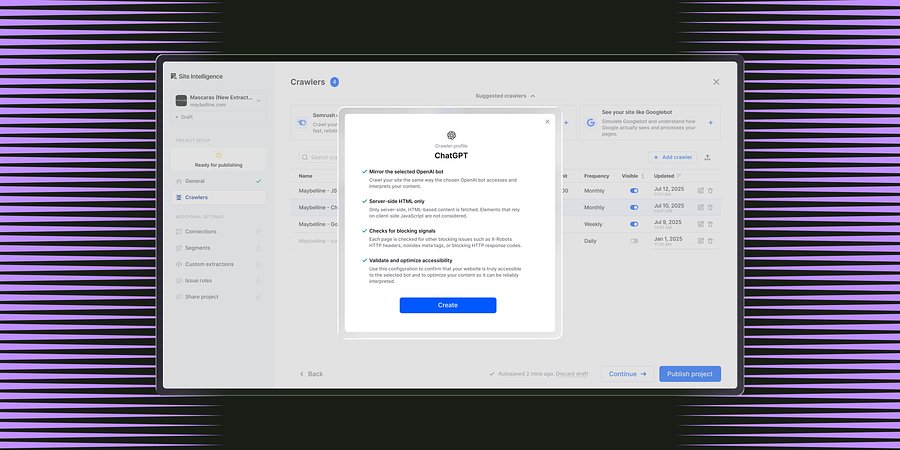
Enterprise Site Intelligence Adds Crawler Profiles for AI Agents and Search Bots
New bot simulation capabilities let teams see their website exactly as AI models and search engines do. Without manual configuration.
Product News
March 31, 2026
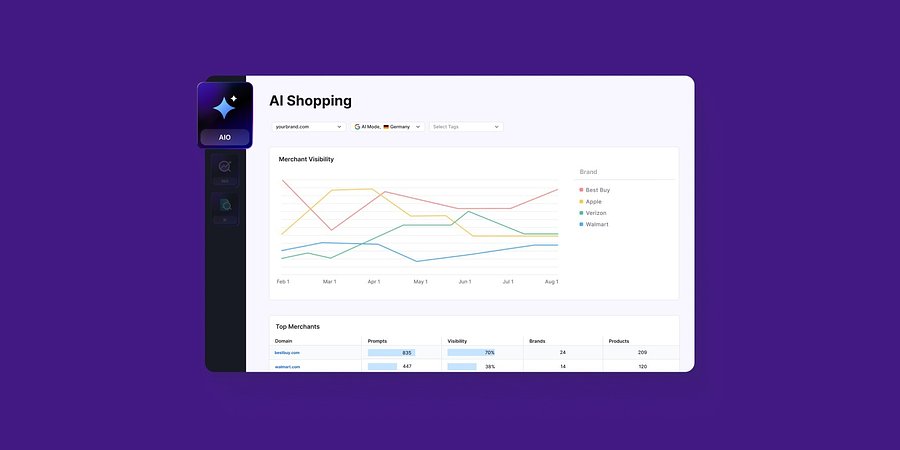
Enterprise AIO Extends AI Shopping Report Across ChatGPT and Google AI Mode
Semrush Enterprise AI Optimization’s (AIO) AI Shopping report now delivers unified merchant and product-level insights across both AI shopping experiences.
Product News
March 6, 2026
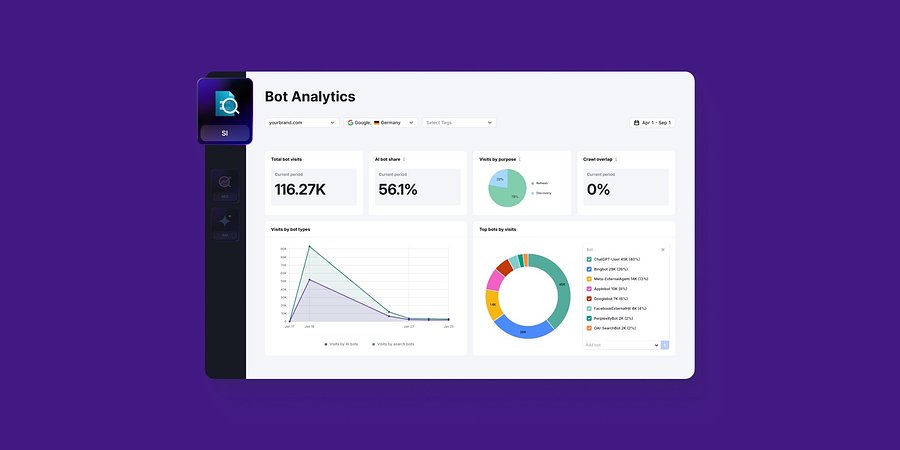
Semrush Enterprise Adds Log File Analysis to Site Intelligence and AI Optimization
New Bot and Agent Analytics capabilities give teams clearer understanding of how search engines and AI crawlers interact with their websites, unlocking new visibility opportunities.
Product News
February 2, 2026
This tool is from almunjizun.com
If you see this on any other website, contact admin.